
Youth Parliament
The selection of representativeswill be based on a combinedevaluation system to ensure both
active participation and fair representation
The selection of representatives
will be based on a combined
evaluation system to ensure both
active participation and fair
representation
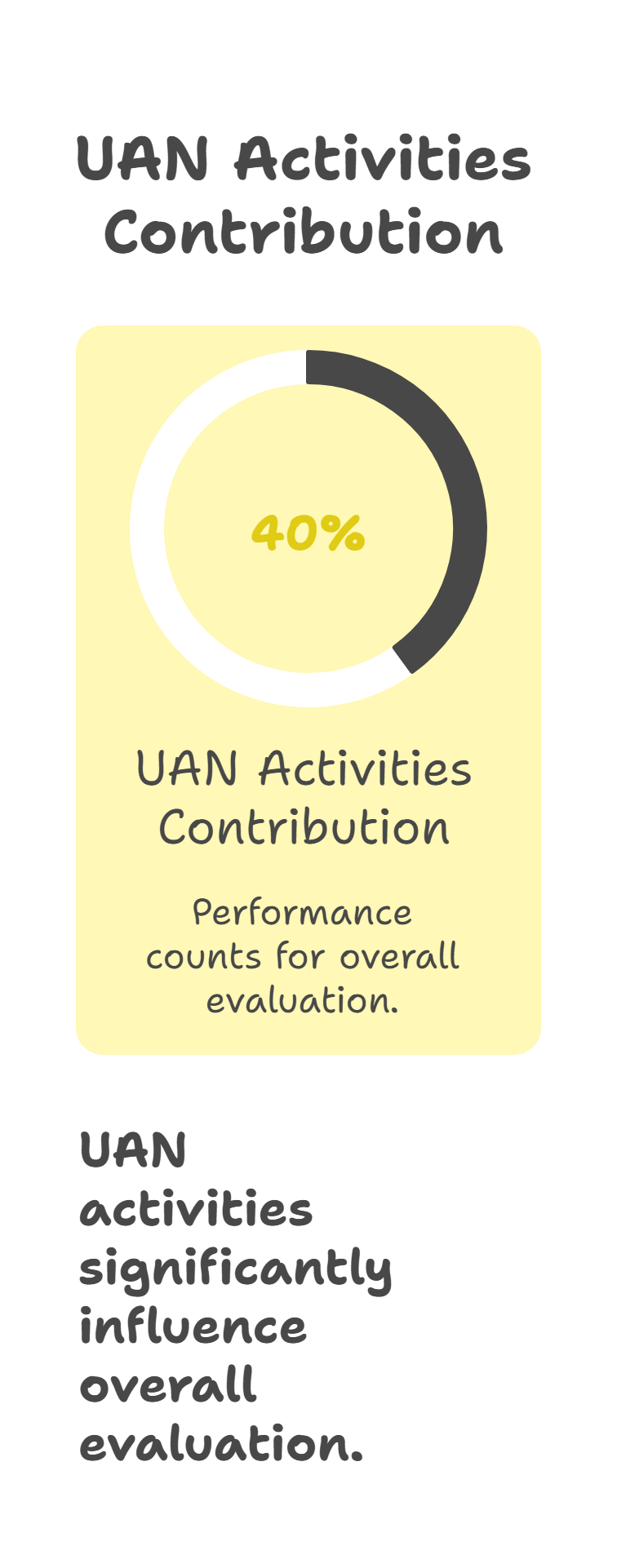
UAN Activities Contribution (40%)
- Performance, involvement, and initiatives in UAN (University/Unit Activities & Networking) will account for 40% of the overall evaluation.
- Factors include attendance, participation in events, leadership roles, and contributions to community service or committee activities.
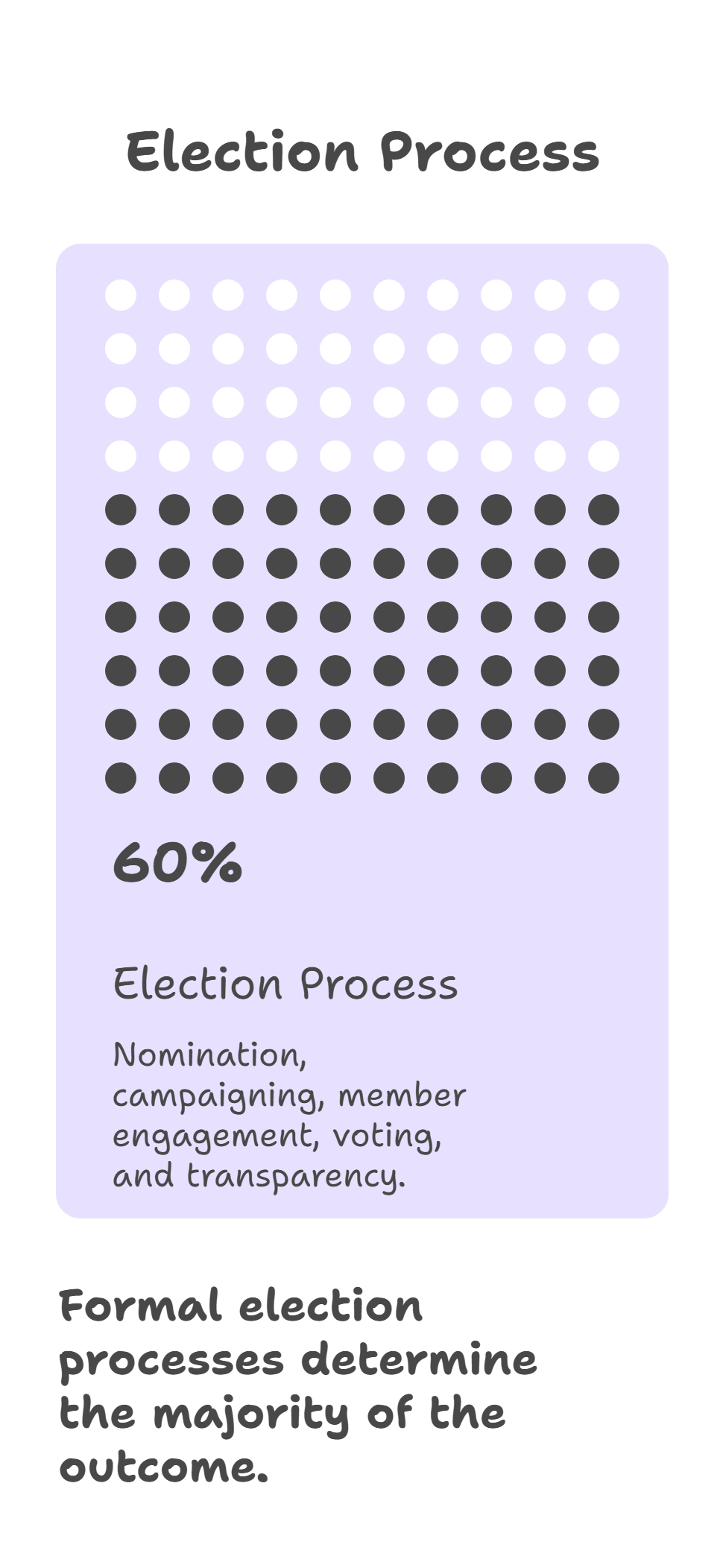
Election Process (60%)
1. The remaining 60% will depend on
the formal election process.
2. This includes nomination,
campaigning, member engagement,
voting, and transparency in
announcing results.
Formal Structure & Integration
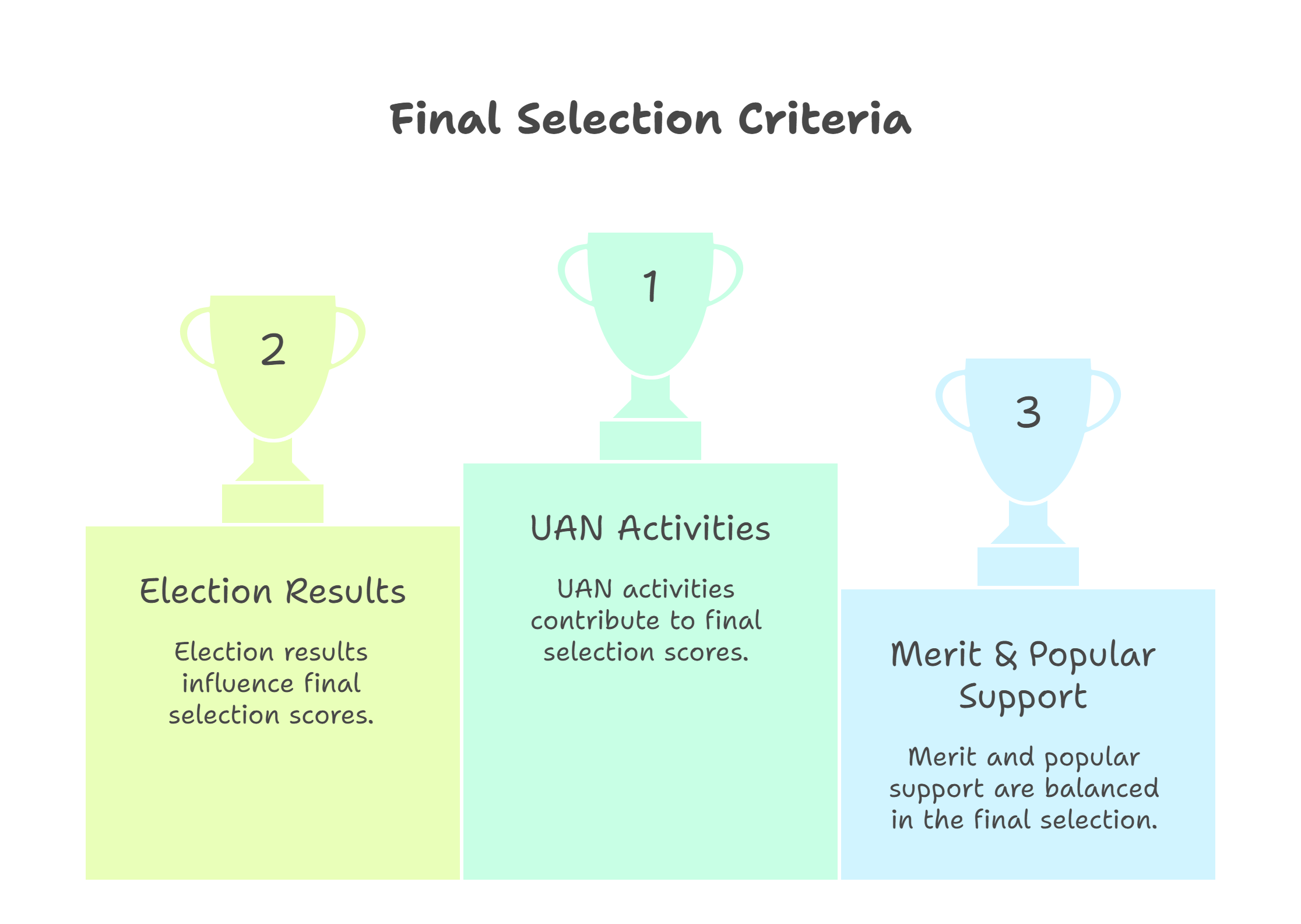
- Candidates’ combined scores from UAN activities and election results will determine their final selection.
- This system encourages both active engagement throughout the year and democratic participation during elections, balancing merit and popular support.
Fairness: Transparent rules, secret ballots wherever possible, and a grievance redressal mechanism ensure fair and impartial processes.
Election Process
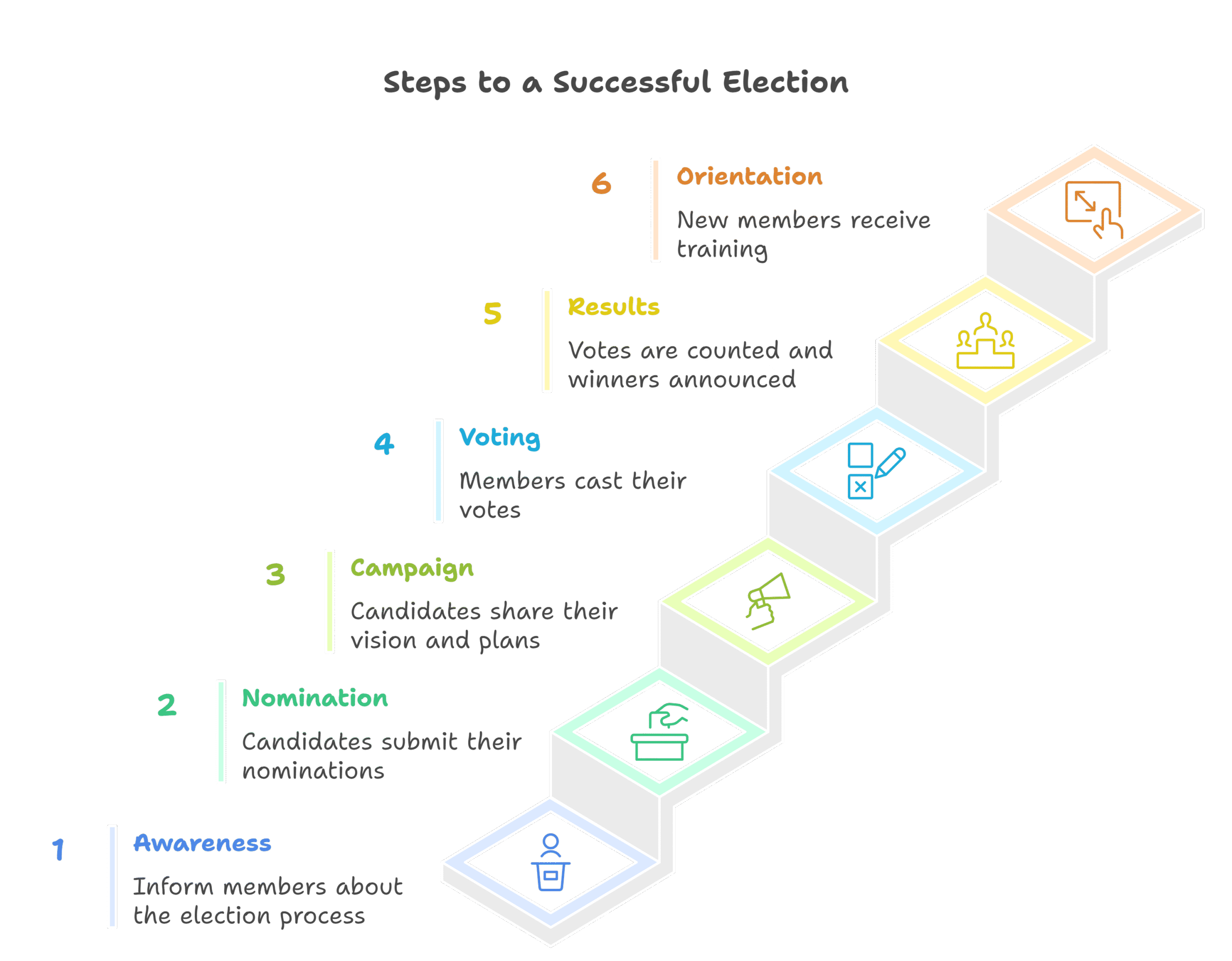
- Awareness: Inform all members about the upcoming elections, positions, and procedures.
- Nomination: Interested candidates submit their nominations for various roles.
- Campaign: Candidates share their plans, vision, and engage with members to gain support.
- Voting: Members cast their votes, ideally via a secret ballot to ensure fairness.
- Results: Votes are counted and winners announced transparently.
- Orientation: Newly elected members receive guidance and training for their roles.
Term: 1 year; renewable through elections. Active participation,
attendance, and proper conduct are required.
Election Process
- Awareness: Inform all members about the upcoming elections, positions, and procedures.
- Nomination: Interested candidates submit their nominations for various roles.
- Campaign: Candidates share their plans, vision, and engage with members to gain support.
- Voting: Members cast their votes, ideally via a secret ballot to ensure fairness.
- Results: Votes are counted and winners announced transparently.
- Orientation: Newly elected members receive guidance and training for their roles.
Term: 1 year; renewable through
elections. Active participation,
attendance, and proper conduct are
required.
Inclusion & Diversity: At least 30–40%
of positions reserved for girls
/women; diversity is encouraged,
including representation of people
with disabilities.
Inclusion & Diversity: At least 30–40% of positions reserved for girls/women; diversity is encouraged,including representation of people with
disabilities.
Election Process
Nomination
Interested candidates submit their nominations for various roles.
Campaign
Candidates share their plans, vision, and engage with members to gain support.
Voting
Members cast their votes, ideally via a secret ballot to ensure fairness.
Results
Votes are counted and winners announced transparently.
Orientation
Newly elected members receive guidance and training for their roles.
Scaling & Promotion
Hierarchy of Progression
Members Progression
School/College → District → Regional (optional) → National → UAN Central Executive Committee (CEC)
Promotion Criteria
Advancement is based on merit (performance, contributions, and impact) and election results. Compliance with the code of conduct is mandatory for eligibility.
Recognition & Rewards
Outstanding members receive certificates, badges, Youth MP ID cards, and may gain access to scholarships, mentorship programs, and other opportunities to further their development.
Difference: Common Volunteering vs UAN Youth Parliament
Global examples such as the UK Youth Parliament, India’s mock parliaments, and Model
United Nations (MUNs) worldwide validate the effectiveness of this model. Key differences include:
Difference: Common Volunteering vs UAN Youth Parliament
Global examples such as the UK
Youth Parliament, India’s mock
parliaments, and Model
United Nations (MUNs) worldwide
validate the effectiveness
of this model. Key differences include:
| Aspect | Common Volunteering | UAN Youth Parliament |
|---|---|---|
| Structure | One-off events or short-term activities | Year-round governance with defined roles and responsibilities |
| Leadership | Participants mainly act as helpers | Students serve as policymakers, project leaders, and committee heads |
| Recognition | Generic certificates of participation | Titles, promotion ladder, awards, badges, and opportunities at national conferences |
| Impact | Short-term contributions | Institutionalized, scalable initiatives with policy-linked outcomes |
Elections & Representation
Everyone has a role. Together we act; together we rise.
· Students: Volunteer, stand for elections, lead committees, deliver projects.
· Teachers: Serve as Faculty Advisors and mentors; ensure inclusivity and safety.
· Professionals: Offer mentorship, internships, training, and pro bono services.
· Leaders & Institutions: Partner with UAN; co-host programs; sponsor cohorts.
UAN Committees & Hierarchy
Central Committee (HQ)
Role: National leadership and policy-making body.
Approves strategies, campaigns, and annual plans.
Liaises with Youth Parliament & national stakeholders.
Provides oversight and accountability for all lower committees.
Division Committee
Oversees all District Committees in a division.
Coordinates inter-district projects.
Ensures alignment with national UAN strategy.
Membership: 1 representative per District Committee.
District Committee
Coordinates activities across all Thana Committees.
Consolidates reports & feedback from Thanas.
Designs and manages district-level initiatives.
Membership: Experienced youth leaders from multiple Thanas.
Thana Committee
Acts as grassroots unit of UAN.
Engages directly with local communities.
Mobilizes youth and volunteers.
Membership: Active UAN member with community ties.
Meetings: Monthly minimum.
Ethics: Adhere to UAN Code of Ethics.